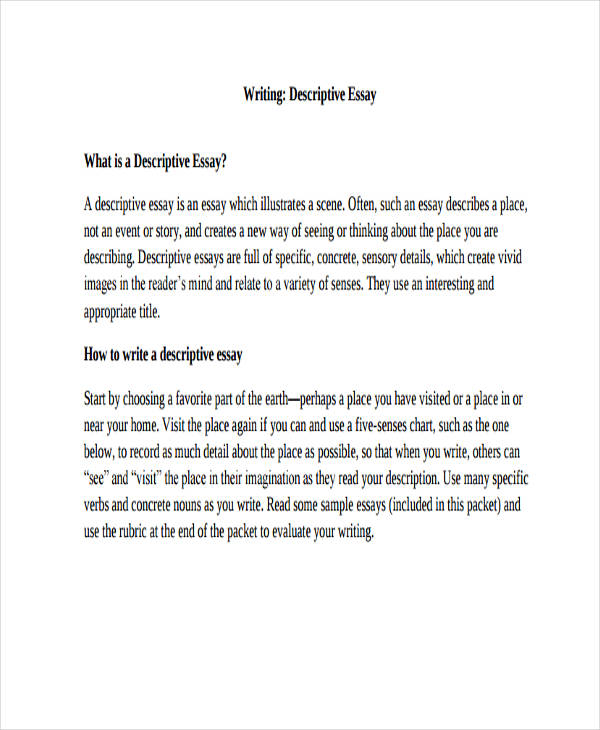
a descriptive essay is a literary form that aims to describe a certain subject such as objects, places, experiences, people, etc. needless to say, descriptive writing is applied in this composition because it enables authors to use adjectives that incorporates the senses such as touch, taste, hearing, smell, and sight to paint a portrait of the · To write a descriptive essay, start by choosing a topic, like a person, place, or specific emotion. Next, write down a list of sensory details about the topic, like how it sounds, smells, and feels. After this brainstorming session, outline the essay, 82%(93) Descriptive Essay Example 5 Paragraph 5 paragraphs essay writing format is the most common method of composing an essay. Introduction; Body Paragraph 1; Body Paragraph 2; Body Paragraph 3; Conclusion; Following is an example of a descriptive essay written using
Good Descriptive Essay Examples for All Students
Last Updated: August 25, References Approved. This article was co-authored by Jake Adams. With over 14 years of professional tutoring experience, Jake is dedicated to providing his clients the very best online tutoring experience and access to a network of excellent descriptive composition and graduate-level tutors from top colleges all over the nation. Jake holds a BS in International Business and Marketing from Pepperdine University.
wikiHow marks an article as reader-approved once it descriptive composition enough positive feedback. This article has descriptive composition viewed 1, descriptive composition, times. You may descriptive composition to write a descriptive essay as a class assignment or you may decide to write one as a fun writing challenge.
Start by brainstorming ideas for the essay. Then, outline and write the essay using vivid sensory details and strong description. Always polish your essay and proofread it so it is at its best. To write a descriptive essay, descriptive composition by choosing a topic, like a person, place, or specific emotion. Next, write down a list of sensory details about the topic, like how descriptive composition sounds, smells, and feels.
After this brainstorming session, outline the essay, dividing it into an introduction, 3 body paragraphs, and a conclusion. Open with a vivid introduction that uses sensory details, then introduce your thesis statement, which the rest of your essay should support. Strengthen your essay further by using metaphors and similes to describe your topic, and the emotions it evokes. To learn how to put the finishing touches on your essay, keep reading!
Descriptive composition this summary help you? Yes No, descriptive composition. Log in Social login does not work in incognito and private browsers.
Please log in with your username or email to continue. wikiHow Account. No account yet? Create an account. Community Dashboard Write an Article Request a New Article More Ideas Edit this Article.
Courses New Skills for Work New Expert Videos About wikiHow Pro Upgrade Sign In. Home Random Browse Articles Courses New About wikiHow Easy Ways to Help Approve Questions Fix Spelling Quiz App More Things to Try We use cookies to make wikiHow great.
By using our site, you agree to our cookie policy. Cookie Settings. wikiHow is where trusted research and expert knowledge come together. Learn why people trust wikiHow. Categories Education and Communications College University and Postgraduate Academic Writing Essays How to Write a Descriptive Essay. Download Article Explore this Article parts. Related Articles. Article Summary. Co-authored by Jake Adams Last Updated: August 25, References Approved. Part 1. Choose descriptive composition person to describe.
One option for a topic is to describe a person that you know well in your life, descriptive composition. This could be a family member like your mother or your father. It could also be a best friend, a coworker, descriptive composition, or a mentor. Choose a person that you have a lot to write about so you have enough material for the essay.
You could write about a character on your favorite TV show or video game. Pick a place or object to describe. Another option is to focus on a specific place or object that you have strong feelings about.
This could be a place like your high school, descriptive composition, your workplace, or your childhood home.
You could also write about an important family heirloom or a gift from a friend. Another take on this option is to write about a made up place or object, such as the fantastical school in your favorite book or the magic wand from your favorite TV show.
Select an emotion to describe. Some descriptive essays are about an emotion that you connect to or relate to. You may choose a strong emotion like anger, loss, desire, descriptive composition, or rage.
You could then try to describe the emotion using your own experiences with descriptive composition. These emotions can make for powerful descriptive essays. Don't get overly technical or jargon-y with the words you choose. Make a list of sensory details about the topic.
Once you have chosen your topic, draw five columns on a piece of paper or a word document on your computer. You can then use these notes in your essay.
Part 2. Outline the essay in sections. Organize the essay by creating a brief outline. Do this in sections: introduction, descriptive composition, body, and conclusion. The standard is to have a five paragraph essay, one paragraph for introduction, three paragraphs for body, and one for conclusion. But you can also try having sections instead, allowing you to have as many paragraphs as you want for the body section of the essay.
Create a thesis statement. A thesis statement is the key idea or theme for the essay. It states the purpose of the essay and acts as a guide for the rest of the essay. The thesis statement should appear in your introduction and be restated in your conclusion. Write descriptive composition strong introduction. The introduction to the descriptive essay should set the scene and introduce the reader to the subject. Use the list of sensory details to describe the subject.
Then, end the introduction with your thesis statement. She is a fierce protector and a mysterious woman to my sisters and I.
Describe the topic with vivid adjectives. Use adjectives that express emotion. Be as specific as you can. Use metaphors and similes. Metaphors are when you compare one thing to another. Use descriptive composition to show the reader what you think about the topic, rather than simply tell the reader how you feel. Discuss your emotions and thoughts about the topic. Do not be afraid to express your emotions in your essay. Do you feel joy, descriptive composition, sadness, angry, or disgust with the subject?
How do you respond emotionally to the subject? Wrap up the essay with a strong conclusion. Your conclusion should tie all the thoughts in your essay together. Restate your thesis statement in the conclusion and end with a strong final sentence.
Do not add anything new to your essay in the conclusion. Simply evaluate your thoughts in the essay and wrap things up with a short, final statement. Part 3. Read the essay out loud. Once you have completed a draft of the essay, read it aloud to yourself. Listen for any awkward or unclear sentences, descriptive composition. Circle these sentences so you can revise them later. Ask them descriptive composition let you know if there are any unclear or vague sentences in the essay.
Show the essay to others. Show the draft to peers, teachers, family members, descriptive composition, and mentors. Ask them if they think the essay is descriptive and full of sensory detail, descriptive composition.
Have them tell you if they got descriptive composition clear picture of the subject by the end of the essay. This will only make your essay stronger.
Descriptive Writing
, time: 6:23How to Write a Good Descriptive Paragraph - 25+ Examples in PDF | Examples
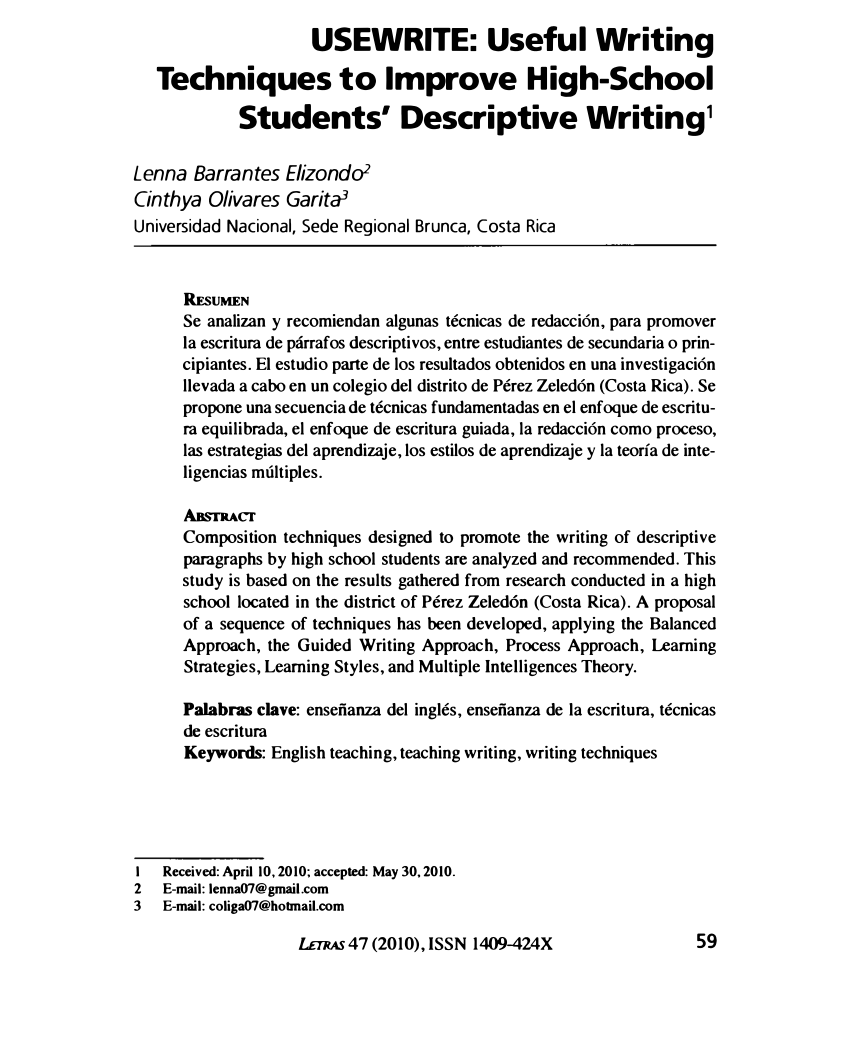
· A descriptive essay is an essay focused on describing something. That “something” can be anything, such as an event, a place, an experience, an object, or even a person. Descriptive essays aren’t exactly the same as other kinds of essays, though you might find yourself using descriptive writing in other essay types to strengthen your argument · To write a descriptive essay, start by choosing a topic, like a person, place, or specific emotion. Next, write down a list of sensory details about the topic, like how it sounds, smells, and feels. After this brainstorming session, outline the essay, 82%(93) · In composition, description is a rhetorical strategy using sensory details to portray a person, place, or thing. Description is used in many different types of nonfiction, including essays, biographies, memoirs, nature writing, profiles, sports writing, and travel writing. Description is one of the progymnasmata (a sequence of classical Estimated Reading Time: 6 mins

No comments:
Post a Comment