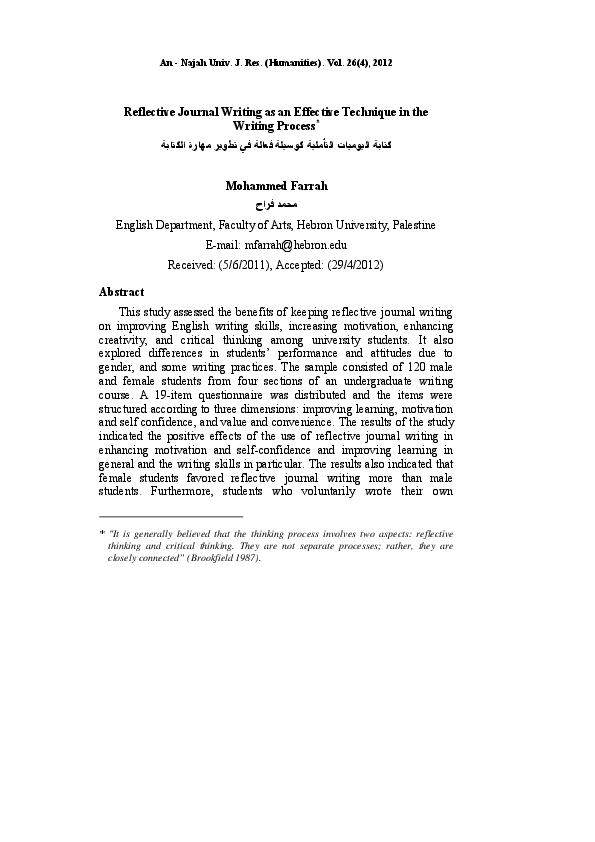
· – Choose your vocabulary carefully to properly convey your feelings and emotions. Remember that reflective writing has a descriptive component and so must have a wide range of adjectives to draw from. Avoid vague adjectives such as ‘okay’ or ‘nice’ as they don’t really offer much insight into your feelings and personality Reflective writing requires you to think about things and how they went, what went wrong, and what you could have done to change the outcome. In other words, reflective writing requires the writer to take a deeper look into his life. You may also see memo writing examples & samples. 3. Reflective writing will take all of your honesty Reflective writing may ask you to consider the link between theory (what you study, discuss and read about at university) and practice (what you do, the application of the theory in the workplace). Reflection on practical contexts enables you to explore the relationship between theory and practice in an authentic and concrete way
Examples of Reflective Writing | UNSW Current Students
Aim to be descriptive in your use of language. You should use imagery, reflective writing techniques, sentence structure and other techniques to bring your writing to life. Pay reflective writing techniques attention to describing your thoughts and feelings about the event, experience, person or thing. Describe your emotions and reactions from the time it took place and from your perspective now to prove you have thought about it and are able to reflect upon it.
Remember your audience. You will probably write about something from your own experience but the reader will be irritated if you keep writing in the first person 'I went', 'I did', 'I saw', I got without pausing to put across something more meaningful.
Try to make the reader share in the experience or feeling you are trying to describe. Make good use of description to create a vivid impression of the experience or feeling rather than simply listing what happened.
Reflective writing techniques your essay with an overall emotion or theme in mind - happiness, reflective writing techniques, excitement, fear, sorrow - and plan the language and structure to match. Don't weaken the impact of your writing by including boring details. If it's not going to add to the feeling or insight you want to create, why put it in? There should always be a sense of development. You need to think about how the experience has changed you or others.
You might consider what you have learned about yourself, how you have changed and what you could have done differently. Statements such as, 'At the time', 'Looking back', and 'I can see now' can start the reflective thinking reflective writing techniques. They don't really tell us how you felt about something, reflective writing techniques they do not reflect your personality.
Don't forget to check your spelling, punctuation and sentence and paragraph structures. Personal writing is a popular choice but you must reflect on the experience before you write. This should help you to avoid a boring account of events. Change language English Cymraeg Gaeilge Gàidhlig.
Reflective writing tips Aim to be descriptive in your use of language. National 5 Subjects National 5 Subjects up.
Reflective writing
, time: 6:28Reflective writing tips - Personal reflective - National 5 English Revision - BBC Bitesize
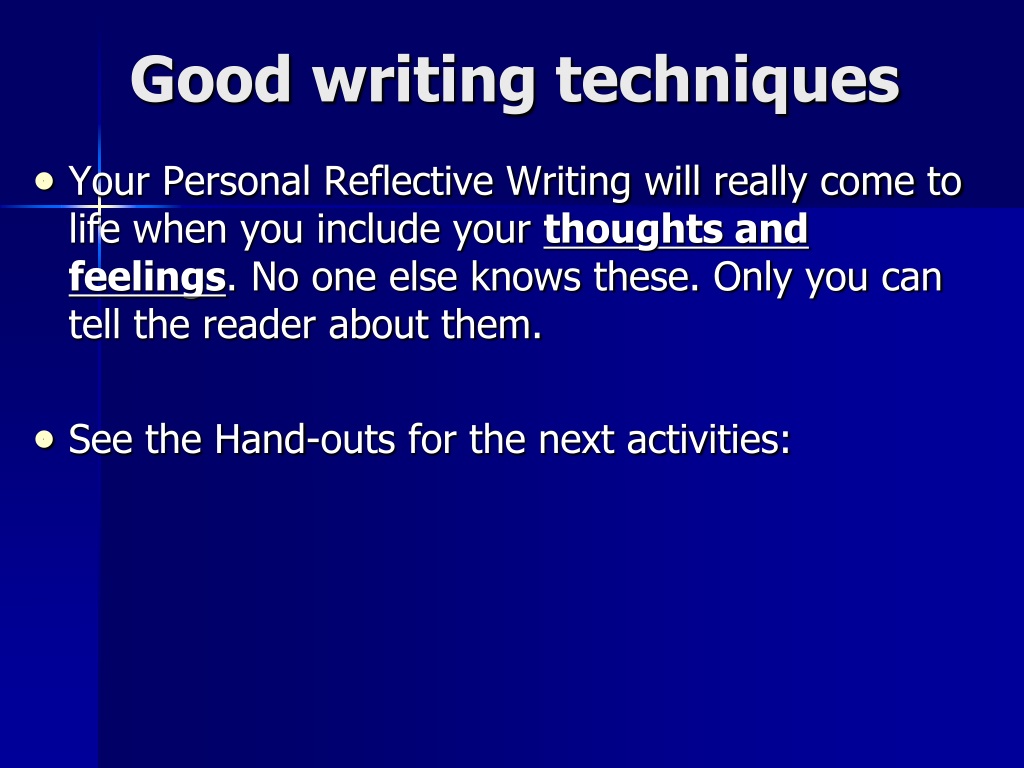
· He has a few choices on how to use reflective writing for this experience: 1. Reflective Journaling. Mr. Tyler may ask students to go back to their seats and write about what they learned in their Author: Sharon Linde Reflective writing requires you to think about things and how they went, what went wrong, and what you could have done to change the outcome. In other words, reflective writing requires the writer to take a deeper look into his life. You may also see memo writing examples & samples. 3. Reflective writing will take all of your honesty · – Choose your vocabulary carefully to properly convey your feelings and emotions. Remember that reflective writing has a descriptive component and so must have a wide range of adjectives to draw from. Avoid vague adjectives such as ‘okay’ or ‘nice’ as they don’t really offer much insight into your feelings and personality

No comments:
Post a Comment